Tamil Gowri Panchangam 2026 & 2027
Sunday Gowri Panchangam 2026 & 2027
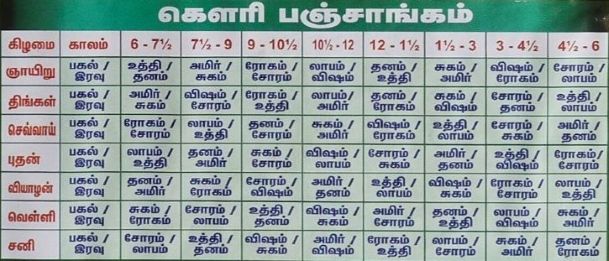
| Time (From - To) | Day Light | Night |
|---|---|---|
| 6.00 -7.30 | Utthi - Good | Dhanam - Wealth |
| 7.30 - 9.00 | Amirtha - Best | Sugam - Fine |
| 9.00 - 10.30 | Rogam - Evil | Soram - Bad |
| 10.30 - 12.00 | Laabam - Gain | Visham - Bad |
| 12.00 - 1.30 | Dhanam - Wealth | Utthi - Good |
| 1.30 - 3.00 | Sugam - Fine | Amirtha - Best |
| 3.00 - 4.30 | Visham - Bad | Rogam - Evil |
Monday Good Timings - Gowri Panchangam 2026 & 2027
| Time (From - To) | Day Light | Night |
|---|---|---|
| 6.00 -7.30 | Amirtha - Best | Sugam - Fine |
| 7.30 - 9.00 | AVisham - Bad | Soram - Bad |
| 9.00 - 10.30 | Rogam - Evil | Utthi - Good |
| 10.30 - 12.00 | Laabam - Gain | Amirtha - Best |
| 12.00 - 1.30 | Dhanam - Wealth | Rogam - Evil |
| 1.30 - 3.00 | Sugam - Fine | Visham - Bad |
| 3.00 - 4.30 | Soram - Bad | Dhanam - Wealth |
Tuesday Good Timings -Gowri Panchangam 2026 & 2027
| Time (From - To) | Day Light | Night |
|---|---|---|
| 6.00 -7.30 | Rogam - Evil | Soram - Bad |
| 7.30 - 9.00 | Laabam - Gain | Utthi - Good |
| 9.00 - 10.30 | Dhanam - Wealth | Soram - Bad |
| 10.30 - 12.00 | Sugam - Fine | Amirtha - Best |
| 12.00 - 1.30 | Visham - Bad | Soram - Bad |
| 1.30 - 3.00 | Utthi - Good | Laabam - Gain |
| 3.00 - 4.30 | Soram - Bad | Sugam - Fine |
Wednesday Good Timings -Gowri Panchangam 2026 & 2027
| Time (From - To) | Day Light | Night |
|---|---|---|
| 6.00 -7.30 | Laabam - Gain | Utthi - Good |
| 7.30 - 9.00 | Dhanam - Wealth | Amirtha - Best |
| 9.00 - 10.30 | Sugam - Fine | Rogam - Evil |
| 10.30 - 12.00 | Visham - Bad | Laabam - Gain |
| 12.00 - 1.30 | Soram - Bad | Sugam - Fine |
| 1.30 - 3.00 | Amirtha - Best | Dhanam - Wealth |
| 3.00 - 4.30 | Utthi - Good | Visham - Bad |
Thursday Good Timings -Gowri Panchangam 2026 & 2027
| Time (From - To) | Day Light | Night |
|---|---|---|
| 6.00 -7.30 | Dhanam - Wealth | Amirtha - Best |
| 7.30 - 9.00 | Sugam - Fine | Rogam - Evil |
| 9.00 - 10.30 | Soram - Bad | Visham - Bad |
| 10.30 - 12.00 | Amirtha - Best | Dhanam - Wealth |
| 12.00 - 1.30 | Utthi - Good | Laabam - Gain |
| 1.30 - 3.00 | Visham - Bad | Sugam - Fine |
| 3.00 - 4.30 | Rogam - Evil | Soram - Bad |
Friday Good Timings -Gowri Panchangam 2026 & 2027
| Time (From - To) | Day Light | Night |
|---|---|---|
| 6.00 -7.30 | Sugam - Fine | Rogam - Evil |
| 7.30 - 9.00 | Soram - Bad | Laabam - Gain |
| 9.00 - 10.30 | Utthi - Good | Dhanam - Wealth |
| 10.30 - 12.00 | Visham - Bad | Sugam - Fine |
| 12.00 - 1.30 | Amirtha - Best | Soram - Bad |
| 1.30 - 3.00 | Dhanam - Wealth | Utthi - Good |
| 3.00 - 4.30 | Laabam - Gain | Visham - Bad |
Saturday Good Timings -Gowri Panchangam 2026 & 2027
| Time (From - To) | Day Light | Night |
|---|---|---|
| 6.00 -7.30 | Soram - Bad | Laabam - Gain |
| 7.30 - 9.00 | Utthi - Good | Dhanam - Wealth |
| 9.00 - 10.30 | Visham - Bad | Sugam - Fine |
| 10.30 - 12.00 | Amirtha - Best | Visham - Bad |
| 12.00 - 1.30 | Rogam - Evil | Utthi - Good |
| 1.30 - 3.00 | Laabam - Gain | Soram - Bad |
| 3.00 - 4.30 | Sugam - Fine | Amirtha - Best |
What is Gowri Panchangam?
Gowri Panchangam is a traditional timekeeping system used in Tamil astrology to find auspicious timings (Nalla Neram) during the day. It is especially popular among Tamil-speaking communities for planning daily tasks, religious activities, and important life events. The day is divided into various time segments, each ruled by different planetary influences, which are either considered favorable (Gowri Nalla Neram) or unfavorable (Durmuhurtham or bad time). People rely on the Gowri Panchangam to make sure their actions align with positive cosmic energies, improving chances of success and harmony.
How Gowri Panchangam Works
The Gowri Panchangam divides the daytime (sunrise to sunset) and nighttime (sunset to sunrise) into eight equal segments. Each segment is assigned a name like Amirdha, Uthi, Laabam, Sugam (which are auspicious), or Rogam, Soram, Visham, Dhanam (which are inauspicious or neutral). These time blocks change daily based on sunrise and are calculated using ancient astrological formulas. People consult Gowri Panchangam charts or use online Nalla Neram calculators to identify the best time to start travel, attend interviews, begin new ventures, or perform religious rituals.
Importance of Gowri Panchangam
Gowri Panchangam is widely followed for both personal and professional purposes. Whether it's starting a new job, opening a shop, signing important documents, or arranging a marriage ceremony, people in Tamil Nadu and other parts of South India look for the Gowri Nalla Neram to ensure good fortune and avoid obstacles. Unlike a full Panchangam that includes planetary positions, tithi, and nakshatra, the Gowri Panchangam focuses specifically on hourly good and bad timings throughout the day, making it a quick and practical reference for daily use.
Relevance of Gowri Panchangam in Today's World
Even in today’s fast-paced digital world, Gowri Panchangam continues to hold significance, thanks to its deep cultural roots and spiritual relevance. Many mobile apps and websites now offer daily Gowri Panchangam updates, making it easier than ever to access Nalla Neram timings on the go. While some may see it as a superstition, many believe that following auspicious timings aligns human efforts with universal energies, increasing the likelihood of success. By blending ancient wisdom with modern tools, Gowri Panchangam remains a vital part of Tamil traditions and decision-making.
Gowri Panchangam Good Timings for 2026 & 2027 | Today's Gowri Panchangam Calendar
Gowri Panchangam or gowri Panchang is traditionally followed for many centuries by tamil people to calculate the calendar dates, Good time, effects of planets, etc. Nalla Neran ( good time ) from Gowri panchangam is used to identify the good time in a day based on the Uthi, Amritha, Thanam, laabam ( Gain ) and Sugam. Similarly there are three bad time indicator in Gowri Panchangam Like Rogam, Soram and Visham.
Day Gowri Panchangam Timings ( Kaalai) for 2026 & 2027
Day (Morning ) Gowri panchangam is the time between Sun Rise and Sun Set.
Night Gowri Panchangam Timings (Maalai)
Night (Maalai) Gowri panchangam is the time between Sun set and Sun rise. Millions of Tamil Festivals, Muhurthams, Wedding and functions are held based on the good time from Gowri Panchangam day and night Calendar. Gowri Panchangam table listed based on Sunday, Monday, Tuesday, Wednesday, Thursday, Friday and Saturday against each day timings. The Gowri Panchangam Time slots are 6.00 to 7.30 , 7.30 to 9.00, 9.00 to 10.30 10.30 to 12, 12.00 to 1.30, 1.30 to 3.00 and then 3.00 to 4.30 Hours. Gowri Panchangam is referred with different names as mentioned below...
- Tamil Gowri Panchang / Tamil Gowri Panchangam 2026 & 2027
- Gowri Panchangam Nalla Neram
- Daily Gowri Panchangam 2026 & 2027
- Calendar Gowri Panchangam
- Gowri Panchangam Timing Chart
- Gowri Panchangam Time Table
- Gowri Panchangam Nalla Neram Today
- Daily Nalla Neram / Good time - Gowri Panchangam 2026 & 2027
- Sunday, Monday, Tuesday, Wednesday, Thursday, Friday, Saturday Gowri Panchangam Table
Gowri Panchangam 2026 & 2027
Gowri Panchangam, also known as Gowri Panjangam, is a traditional Hindu almanac that provides information about auspicious and inauspicious timings throughout the day. It plays a crucial role in determining the best times for conducting various activities, rituals, and ceremonies in Hindu culture. The panchangam is based on the positions of celestial bodies, primarily the moon.
Auspicious Timings
Gowri Panchangam helps individuals and priests identify the most favorable moments to commence important events, including:
- Weddings and marital ceremonies
- Housewarming (Griha Pravesh)
- Naming ceremonies
- Religious rituals and pujas
- Starting a new business or venture
Gowri Panchangam Elements
Gowri Panchangam typically consists of the following elements:
- Tithi: The lunar day
- Vara: The day of the week
- Nakshatra: The constellation in which the moon is located
- Yoga: A specific combination of sun and moon
- Karana: A half-day (each day is divided into two karanas)
- Amrita Kalam: A particularly auspicious period of time
Consulting Gowri Panchangam
People often consult Gowri Panchangam to determine the most auspicious timings for various activities. It is considered a valuable tool for ensuring the success and positivity of important life events. Gowri Panchangam may be available in printed formats or accessed through digital means, making it easily accessible for those seeking its guidance.
Keep in mind that regional variations and cultural practices can influence the specifics of Gowri Panchangam. Therefore, it's common to consult local astrologers or panchangam experts who have a deep understanding of the panchangam system and can provide personalized guidance for specific events.

Mrs. Kalavathi has over 35 years of experience in Tamil cultural traditions, calendar calculations, and spiritual observances. Specializing in Panchangam and auspicious date calculations, she has guided countless families in performing important events aligned with cosmic rhythms. Read more about Mrs. Kalavathi’s work.